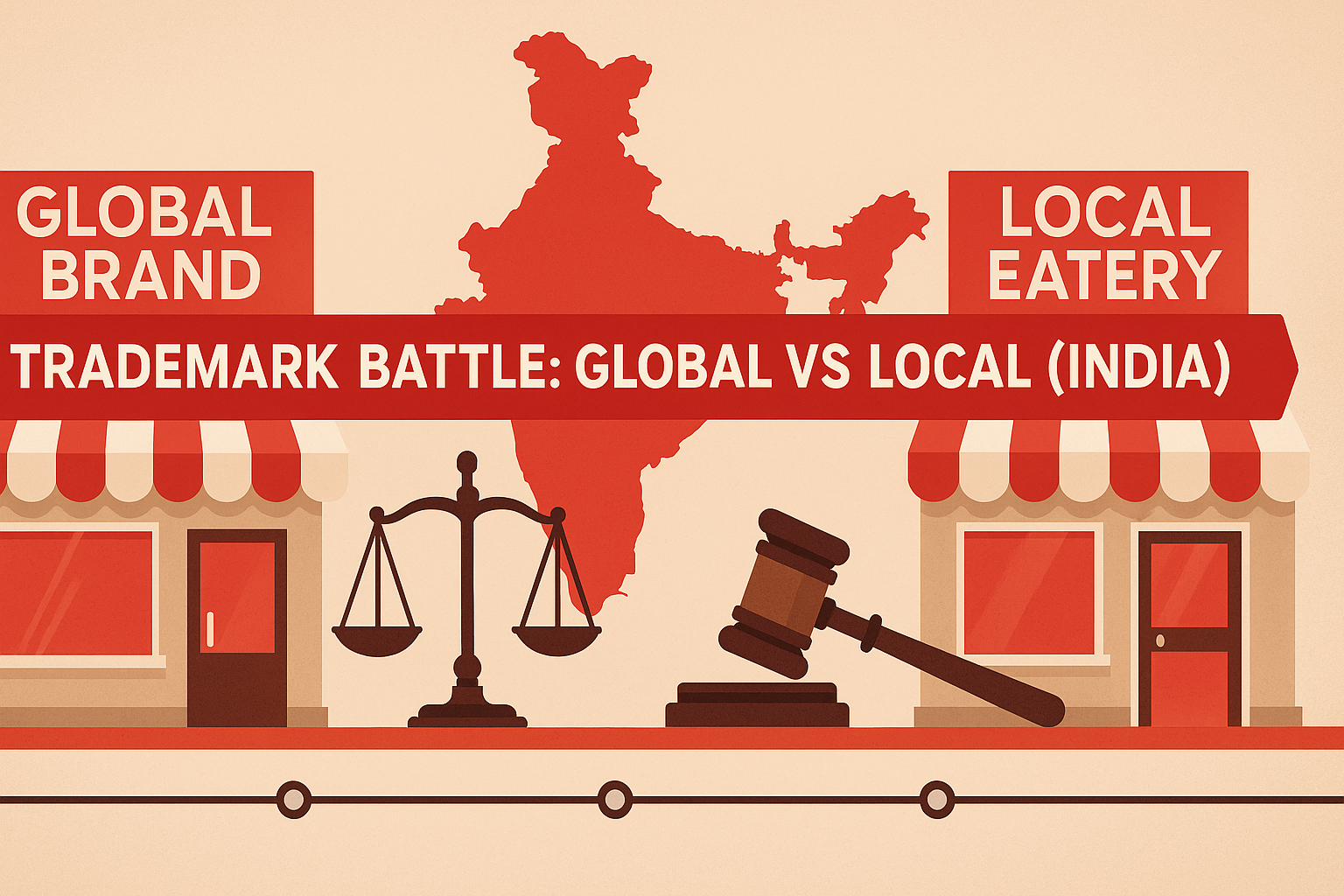
A story of how one small restaurant challenged a global giant — and won (for now)
1. The Background
Burger King Corporation — the global fast-food giant founded in 1954 — entered India in 2014, decades after it had become a household name across the world.
But in Pune, Maharashtra, a small local restaurant had already been using the same name — “Burger King” — since the early 1990s. Operated by a local couple, the outlet had earned its own loyal customer base long before the American brand ever served a Whopper in India.
When the U.S. company began enforcing its trademark rights, a long legal battle began — one that revealed how territorial trademark laws can surprise even the biggest of brands.
2. The Legal Dispute
Burger King (U.S.) filed a lawsuit claiming that the Pune restaurant’s use of the same name infringed its registered trademarks and caused brand confusion.
The local restaurant owners countered that they had been using the name “Burger King” honestly and continuously since 1992 — more than 20 years before the American company opened its first Indian outlet.
Although Burger King Corporation had registered trademarks in India as early as 1979, the court ruled that actual use in India mattered more than registration alone.
In mid-2024, the Pune District Court dismissed the American brand’s infringement claim, noting that the local eatery had genuine prior use.
Burger King has appealed the decision, and the matter now rests before the Bombay High Court.
3. Why the U.S. Chain Lost (for Now)
Several key factors worked against the global fast-food giant:
- Prior Use Prevails
- The Pune restaurant proved it had used the name for over 30 years, before the U.S. chain’s Indian entry.
- Under Indian law, first use in the country outweighs later registrations by foreign entities.
- Lack of Active Local Presence
- Although the American Burger King had Indian trademarks, it did not operate restaurants or advertise locally until 2014.
- Weak Evidence and Procedural Gaps
- The court pointed to procedural issues and insufficient evidence of the U.S. brand’s “trans-border reputation” within India before 2014.
- The Principle of Honest Concurrent Use
- Indian law protects those who have adopted a mark in good faith and used it continuously, even if a larger brand later enters the market.
4. Lessons for Global Brands
1. Trademark rights are territorial
Trademark protection is country-specific. Even world-famous brands must establish local usage and goodwill to enforce their rights effectively.
2. Conduct deep due diligence before market entry
Check whether anyone is already using the same or similar brand name — even informally. Local searches and early filings can prevent future legal headaches.
3. Register and use your mark early
Registration alone isn’t enough — courts value actual use. Launch activity, advertising, or even public announcements of intent can help establish presence.
4. Document everything
Maintain evidence of first use, marketing spend, and public recognition. These records can make or break your case.
5. Respect honest local businesses
Sometimes coexistence or rebranding may be better than prolonged litigation. Courts often side with honest local users who act in good faith.
5. Broader Implications
The Burger King case is a wake-up call for global expansion teams: global reputation doesn’t automatically translate to local rights.
India, like many jurisdictions, prioritizes territoriality and first use, reinforcing the idea that brand protection must start well before commercial entry.
For small businesses, this case is also empowering — it shows that a well-documented history of genuine use can stand strong against even the biggest names in the world.
6. Key Takeaway
Global recognition doesn’t override local rights.
Trademarks are about where and how you use them — not just who’s most famous.
7. Suggested Headline Options
- “How a Tiny Pune Eatery Beat Burger King in Court — and What Every Brand Should Learn”
- “When Global Giants Lose the Name Game: Inside the Burger King India Trademark Battle”
- “David vs. Goliath: The Burger King Case That Redefined Trademark Rights in India”